
 In this exclusive investigaon by National Defence, Shailesh Kumar tried to pull together the pieces of puzzle spread in different parts of the world. To understand the perspective or to get insight into a possible influence operation by foreign powers in Jantar Mantar CJP Protest, one can look at the chain of persons and events starting with Cockroach Janta Party founder Abhijeet Dipke, who studied at Department of Mass Communication in Boston University.
Dipke’s College of Communication is just a 2 minutes walk where Sikh Association at Boston University (SABU) screens the documentary “Battle of Amritsar” in BU Campus.
The documentary is directed by pro- Khalistan activist Shamsher Singh of NSYF, who is also the spokesperson of Khalsa Center, which is headquartered near Gurudwara Dashmesh Sahib in Surry, British Columbia in Canada.
S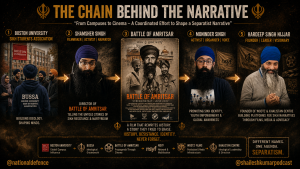 hamsher Singh, who lives in UK is a close associate of Moninder Singh, who is in turn was the close associate of slain Khalistani seapratist and India’s most wanted ISI trained terrorist Hardeep Singh Nijjar, who headed Guru Nanak Sikh Gurudwara in Surrey.
The anti India documentary on 1984 episode “Battle of Amritsar” was also screened at London School of Economics (LSE), where Cockroach Janta Party’s spokerson, Ashutosh Ranka studied Masters in Public Administration. Both of these institutes allegedly infiltrated and infested by anti- India Khalistan separatists who run influence campaign in Boston University and LSE campus.
CJP Founder, Abhijeet Dipke confessed that food that includes Pizzas, Burgers, Lachcha Paranthas, Juice and water was provided by Khalsa Aid, headed by Ravinder (Ravi) Singh, who is known for his anti- India sentiments. India’s National Investigating Agency (NIA) has on multiple occasions interrogated functionaries of UK Headquartered Khalsa Aid for its alleged links with Sikhs For Justice (SFJ) headed by Khalistani Separatist Gurpatwant Singh Pannu, a close associate of slain Hardeep Singh Nijjar.
Canada’s the then Prime Minister Justine Trudeau first accused agents of Government of India for the murder of Hardeep Singh Nijjar, however, recently the Canada and USA gave clean chit to Modi Government. But Khalistani separatists, who are just a bunch leave no stone unturn in maligning, discrediting and dislodging Modi Government.
In this vicious cycle of influence operations run by Khalistani separatists, it is likely that many get trapped by these elements unknowingly and some fall prey to their nefarious designs. Political Parties too at time fail to clearly distinguish the intricate layers of conspiracies by these foreign elements who try to interfere in India’s internal affirs by all ways and means.
Shailesh Kumar, National Defence
New Delhi, 29 July 2026
Is Abhijeet Dipke’s Cockroach Janta Party A National Security Threat? Is There A Foreign Hand Behind Cockroach Janta Party? | Is Jantar Mantar CJP Protest A Case of Foreign Interference? A National Defence Investigation
Documents, statements, OSINT and publicly available evidence utilized for this investigation, raise serious questions about the alleged presence and activities of pro-Khalistan separatist networks on the Boston University campus, where Cockroach Janta Party leader Abhijeet Dipke studied for a Master of Science in Public Relations.
Abhijeet Dipke himself has stated that food, water and other assistance for the Jantar Mantar protest were provided by Khalsa Aid, among others. This investigation examines whether such support—including pizzas, burgers, lachcha parathas and other supplies—could have helped sustain the protest and enable large numbers of demonstrators to remain at the site without any obvious public trail of coordination.
Khalsa Aid has remained under the scrutiny of India’s national security agencies for several years, and its functionaries have previously been questioned by Indian investigative agencies.
But the story does not end there.
A US-based Khalistani separatist publicly pledged US$ 1million in support of the Cockroach Janta Party movement. The same individual also claimed that he had spoken with the CJP leadership over a Zoom call during the Jantar Mantar protest.
Who is this US-based Khalistani separatist, Gurpatwant Singh Pannun, the leader of Sikhs for Justice, an organisation banned in India under the UAPA? What evidence supports these claims? And how do these pieces fit together linking it to the Bostin University?
This investigation conceptualises the Cockroach Janta Party protest as a national security triangle. At one corner is Abhijeet Dipke, at the second are India’s opposition parties, and at the third are pro-Khalistan separatist elements.
Enclosing this triangle is a broader circle occupied by Gen Z, Khalistan-related aid, and India’s police and security agencies—different forces that, according to this investigation, directly intersect with India’s national security.
The next question is: What influence, if any, could Abhijeet Dipke have been exposed to during his time at Boston University?
Public records show that Abhijeet Dipke earned a Master of Science in Public Relations from the Department of Mass Communication at Boston University, USA.
Now, let’s examine another publicly documented fact.
Just a short distance from the Department of Mass Communication operates the Sikh Association at Boston University, commonly known as SABU
On its official Instagram page, SABU provides two prominent links. One is a Google Form inviting feedback from students. The second is far more significant for this investigation.
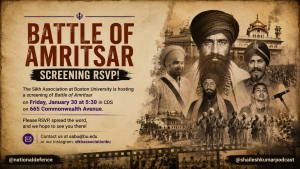
It is an invitation to a public screening of a documentary titled “Battle of Amritsar.”
The invitation reads: “The Sikh Association at Boston University is hosting a screening of Battle of Amritsar on Friday, January 30 at 5:30 PM in CDS, 665 Commonwealth Avenue. Please RSVP, spread the word, and we hope to see you there.”
The event announcement also encouraged participants to submit questions for a discussion following the screening.
So, what exactly is Battle of Amritsar?
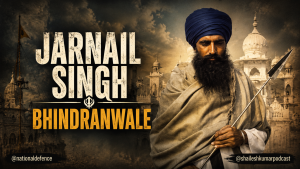 Battle of Amritsar presents a Sikh nationalist perspective on the events surrounding Operation Blue Star in June 1984. It examines the Indian Army’s military operation inside the Golden Temple complex in Amritsar, the role of Jarnail Singh Bhindranwale, and the political and historical circumstances leading to the confrontation.
The film also explores the aftermath of the operation, including its impact on the Sikh community and subsequent events in 1984. The documentary is intended as a historical narrative from its creators’ viewpoint and reflects their interpretation of these highly contested and sensitive events.
According to the documentary’s official website, the film is presented by the Khalistan Centre, an organisation that advocates for an independent Sikh homeland.
Public film records show that the documentary was directed by Shamsher Singh, distributed by NSYF Ltd, and produced by Wootz Films in the United Kingdom before its release in 2022.
The documentary credits Moninder Singh as Executive Producer and Deep Singh as Cinematographer. Now, let’s look at the people behind this production.
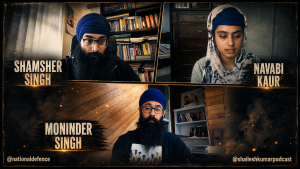 At the time of the documentary’s release, Shamsher Singh was publicly identified as Programme Director of the Khalistan Centre. He is also a co-founder of the National Sikh Youth Federation (NSYF) and has consistently described his work as focusing on Sikh identity, the legacy of 1984, and the advocacy of Khalistan.
The National Sikh Youth Federation describes itself as a Panthic organisation working with Sikh youth and community organisations. Through its own publications, the organisation states that it promotes dialogue on Sikh sovereignty, Sikh identity and Sikh resistance, and regularly participates in documentaries, conferences, panel discussions and public campaigns alongside activists, scholars and political figures.
These are not isolated facts. The publicly documented chain is clear:
Boston University → Sikh Association at Boston University → Screening of Battle of Amritsar → Directed by Shamsher Singh → Distributed by NSYF Ltd → Produced by Wootz Films → Presented by the Khalistan Centre.
These documented links establish how the documentary reached a Boston University student audience through a recognised student organisation.
The next question is not whether the screening took place—it did.
The larger question is: Who created this documentary, what message does it promote, and how do the individuals behind it connect to the wider Khalistan advocacy ecosystem?
 To understand the perspective or a possible fluence operation by foreign powers, one can look at the chain of events starting with Cockroach Janta Party founder Abhijeet Dipke, who studied at Department of Mass Communication in Boston University. Dipke’s College of Communication is just a 2 minutes walk where Sikh Association at Boston University (SABU) screens the documentary “Battle of Amritsar” in BU Campus.
The documentary is directed by Shamsher Singh of NSYF who is also the spokesperson of Khalsa Center, which is headquartered near Gurudwara Dashmesh Sahib in Surry, British Columbia in Canada.
Shamsher Singh, who lives in UK is a close associate of Moninder Singh, who is in turn was the close associate of slain Khalistani and India’s most wanted terrorist Hardeep Singh Nijjar, who headed Guru Nanak Sikh Gurudwara in Surrey.
That is where investigation now turns. In the first part of this investigation, I uncovered one set of connections. But that was only the beginning.
( READ FIRST PART: The CJP Files: Are India’s Students Being Used as Political Cannon Fodder? )
Today, we move to the next layer of this network. Let’s begin with the National Sikh Youth Federation, commonly known as NSYF.
According to the organisation’s own publications, the NSYF was founded in the United Kingdom around 2012. Its publicly identified founding members are Shamsher Singh, Baljit Singh, and Ranveer Singh.
Now, remember these names. Because they lead us to another key individual—Azadvir Singh.
Azadvir Singh is the founder of Wootz, a UK-based organisation known for producing documentaries and content centred on Sikh history and identity.
But here’s where the network begins to intersect. Azadvir Singh is the presenter of the documentary series “Khalistan: Origins of a Nation.”
And who regularly appears alongside him in this series? The very same founding members of the National Sikh Youth Federation—Shamsher Singh, Baljit Singh and Ranveer Singh.
This is not speculation. It is publicly documented by the NSYF itself. Now let’s move one step further.
Shamsher Singh is publicly identified not only as an NSYF co-founder but also as a spokesperson and a prominent figure associated with the Khalistan Centre, according to publicly available material.
The Khalistan Centre, on its own website, states that it works collectively with several organisations, including the National Sikh Youth Federation and other Khalistan advocacy groups.
So, what emerges is not an isolated individual or a standalone organisation.
Instead, we begin to see a network of recurring names, recurring platforms and recurring collaborations.
However, what is documented is the collaboration between Azadvir Singh and the NSYF founders through the documentary series, as well as the publicly acknowledged relationship between the NSYF and the Khalistan Centre.
The question, therefore, is not whether these documented links exist. They do. The real question is: How extensive is this network, and what role has it played over the years?
Now, let’s connect the dots.
The Sikh Association at Boston University (SABU) publicly hosted and promoted a screening of the documentary Battle of Amritsar, according to event material.
This is not the one and only publicly documented links surrounding the documentary and its screening. The Boston University pandors such anti- India pro- Khalistani element for a long time. I will disclose startling revelation in a short while. But before we get there, let’s hear it from Abhijeet Dipke himself.
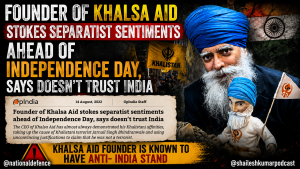 In an interview with a national television channel’s digital platform, Abhijeet Dipke stated that Khalsa Aid, along with Swiggy, provided food and other assistance to protesters during the Jantar Mantar protest. In the same interview, he also criticised the Delhi Police.
Now, why is this significant?
According to the official website of the Khalistan Centre, it operates within a wider network of organisations advocating for Khalistan. Separately, Khalsa Aid is a UK-founded humanitarian charity that has carried out relief operations in India and around the world.
While there is no publicly established evidence of a formal organisational affiliation between the Khalistan Centre and Khalsa Aid, Khalsa Aid has, for several years, been the subject of scrutiny by Indian investigative agencies.
In January 2021, the National Investigation Agency (NIA) summoned functionaries and volunteers of the UK-based Khalsa Aid as witnesses in a case relating to Sikhs for Justice (SFJ), a banned organisation in India. The agency examined whether foreign funding linked to separatist groups had been channelled through certain NGOs during the farmers’ protests.
Khalsa Aid was not charged in that case. The organisation has consistently denied any links with SFJ or any separatist agenda and has maintained that its work is purely humanitarian.
Khalsa Aid’s own website states that during the 2020–21 farmers’ protests it mobilised teams to provide humanitarian assistance, including food, drinking water and basic medical care.
The organisation also notes that the protests concluded after the Government of India repealed the three farm laws in November 2021.
The scrutiny continued. In August 2023, the NIA carried out searches at premises linked to the head of Khalsa Aid’s India chapter in Patiala as part of its ongoing investigations.
Then, in October 2023, Amarpreet Singh, who headed Khalsa Aid’s operations in India, stepped down following media reports and allegations concerning foreign funding. Khalsa Aid rejected those allegations and reiterated that neither the organisation nor its founder, Ravinder Singh, had any association with the banned outfit Sikhs for Justice.
The organisation has repeatedly described the investigations as politically motivated and has maintained that it has always operated as an independent humanitarian charity.
These are the documented facts. The next question is: How did Khalsa Aid become involved in supporting the Jantar Mantar protest, and who facilitated that support?
That is the next layer of this investigation. A fundamental question arises.
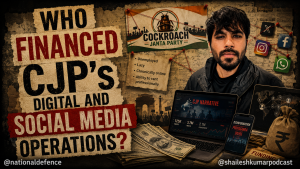 Can supplying large quantities of pizzas, burgers, lachcha parathas, water and juice to sustain a political protest be viewed simply as humanitarian relief?
Or does it also serve as an incentive—making it easier for large numbers of young people to remain at the protest without worrying about basic necessities?
These are legitimate questions that deserve answers.
Let me also make one thing absolutely clear. I have immense respect for the Sikh community. Across the world, Sikhs have earned a dmiration for their extraordinary tradition of seva—serving humanity selflessly, irrespective of caste, creed or religion. That legacy deserves the highest respect.
But when any large-scale logistical support intersects with a politically sensitive protest and there are concerns about possible foreign funding or foreign interference, it inevitably becomes a matter of national security.
For protest organisers, a growing crowd may symbolise success. For India’s security agencies, however, the responsibility is far greater—to follow every lead, examine every financial trail, and investigate every possible link until the complete truth emerges.
Khalsa Aid’s operations in India function alongside Khalsa Aid International, a UK-registered humanitarian charity. While the international organisation raises funds globally, the utilisation of foreign donations in India is subject to Indian regulatory requirements governing overseas funding.
Khalsa Aid International is a registered UK charity (Charitable Incorporated Organisation, Charity No. 1163294) regulated by the UK Charity Commission.
According to its official registration, its charitable purpose is to provide humanitarian relief to people affected by disasters, conflict, poverty, hardship and displacement. But it’s a big question can supply of food and ration to protestors fall under this NGOs mandate?
Boston University also has another historical Khalistani connection that deserves attention.
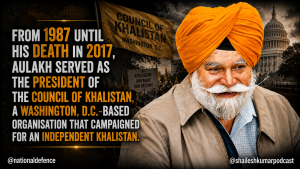 During the 1980s, Dr. Gurmit Singh Aulakh—who later became one of the world’s most prominent advocates of the Khalistan movement—worked as a cancer and genetics researcher at Boston University before dedicating himself full-time to Khalistan advocacy.
From 1987 until his death in 2017, Aulakh served as the President of the Council of Khalistan, a Washington, D.C. based organisation that campaigned for an independent Khalistan.
Over the years, he repeatedly criticised the Government of India over its treatment of Sikhs and other minorities, and publicly urged the United States to suspend aid to India and impose sanctions over alleged human rights violations.
Now consider another set of publicly documented facts. Abhijeet Dipke studied Public Relations at Boston University’s Department of Mass Communication on Commonwealth Avenue.
Just a short walk away is the Sikh Association at Boston University (SABU), which publicly hosted the screening of the documentary Battle of Amritsar. Khalistanis has deeply infiltrated the Boston University Campus. It is a subject matter of investigation if Cockroach Janta Party Founder Abhijeet Dipke fell victim of any influence operation by the separatists or is there any collusion with anti- India forces or may be Abhijeet Dipke totally innocent.
 One more aspect raises questions.
These facts do not, by themselves, establish any connection. However, they raise legitimate questions that merit closer scrutiny.
Did Abhijeet Dipke merely study at Boston University, or was he influenced by individuals, organisations or ideas that were active around him? Was the rapid rise of the Cockroach Janta Party entirely organic, or did external networks play any role? Foreign funding, foreign interference are natural subject of a larger scrutity as the movement suddenly dew a huge section of youngster commonly known as GenZ.
These are the questions this investigation seeks to examine through documents, timelines and verifiable evidence—not assumptions.
If there was no connection, then why did Gurpatwant Singh Pannun publicly announce a pledge of US$1 million in support of the Cockroach Janta Party movement?
On 22 July, Pannun, the leader of Sikhs for Justice, a group banned in India under the UAPA, released a video announcing what he described as a US$1 million “aid” package for the CJP movement. In the same message, he called upon students to support the campaign and claimed that he had held a Zoom meeting with CJP leadership.
These claims raise serious questions that warrant scrutiny.
Khalistani separatist Gurpatwant Singh Pannun has repeatedly run influence campaigns aimed at provoking sections of the Sikh community against India. Through his so-called “Sikh Referendum” campaign, he seeks to promote the demand for Khalistan and advance an anti-India agenda.
However, apart from a small fringe, the overwhelming majority of Sikhs in India firmly believe in the country’s unity and integrity. They have consistently stood with the nation, served in its armed forces with distinction, and made the ultimate sacrifice in defence of India.
At the same time, Pannun’s claims and activities raise several serious questions.
One undeniable fact is that Pannun continues to operate openly from the United States while making statements and carrying out campaigns directed against India. This raises an important question: could such activities continue for years without the knowledge or acquiescence of the authorities or intelligence agencies in the country where he resides?
Over the years, several media reports and publicly available commentaries have alleged that Pannun enjoys indirect protection or support from elements within the U.S. establishment, including claims involving the CIA. However, no conclusive public evidence has been presented to substantiate these allegations, and they remain matters of public speculation and debate.
Meanwhile, Prime Minister Narendra Modi has continued to gain popularity among Sikhs, both in India and across the global Sikh diaspora. On 9 January 2022, Prime Minister Modi announced that 26 December would be observed every year as Veer Bal Diwas in honour of the martyrdom and extraordinary courage of the Sahibzadas of Sri Guru Gobind Singh Ji.
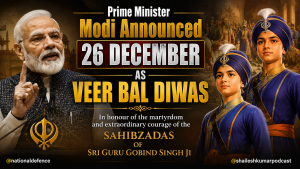 Since then, many supporters of the government have argued that the initiative has strengthened the emotional bond between the Sikh community and the Indian state, while critics claim that separatist groups have intensified their campaigns against the Prime Minister.
By officially commemorating the unparalleled sacrifice of Sahibzada Baba Zorawar Singh Ji and Sahibzada Baba Fateh Singh Ji, the Government sought to pay tribute to one of the most inspiring chapters of Sikh history. Many supporters believe this recognition has left a lasting impression on Sikhs across India and reinforced their sense of national belonging.
Supporters of the government also argue that this growing acceptance of Prime Minister Modi among Sikhs has become one of the reasons why Khalistani separatists and Pakistan-backed networks remain hostile towards him. Indian security agencies have repeatedly accused Pakistan’s Inter-Services Intelligence (ISI) of providing financial, logistical, and operational support to Khalistani extremist organisations.
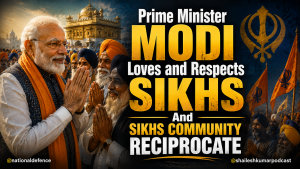 According to Indian authorities, Pannun and other Khalistani extremists regard Prime Minister Modi as one of their principal adversaries and seek to undermine his government through sustained propaganda and separatist activities.
Another aspect also deserves attention.
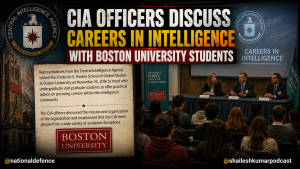
Boston University has, over the years, appointed former CIA officers to its faculty. Public records show that Professor Joseph Wippl and Professor John D. Woodward Jr. have served as Professors of the Practice of International Relations after careers in the intelligence community.
Boston University’s own website has also featured programmes where former CIA officers discussed careers in intelligence with students. It is not hidden fact the India’s most wanted terrorist Pannu has covert CIA support.
These publicly documented facts do not, by themselves, establish any connection between Boston University, the Cockroach Janta Party or Gurpatwant Singh Pannun. However, they form part of the wider context that this investigation is examining.
 There is another noteworthy coincidence. Like Boston University London School of Economics is also infiltrated by these Khalistani separatists.
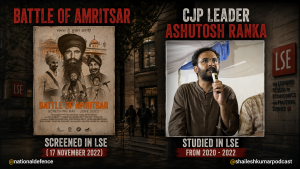
Just as the documentary “Battle of Amritsar” was screened at Boston University, it was also screened at the London School of Economics (LSE) on 17 November 2022.
The event was organised by Nishaan in partnership with the National Sikh Youth Federation (NSYF), led by Shamsher Singh. According to the organisers, the screening marked the conclusion of a remembrance week centred on the events of 1984.
Public records also show that Ashutosh Ranka, a spokesperson for the Cockroach Janata Party, completed a Master of Public Administration degree at the London School of Economics between 2020 and 2022.
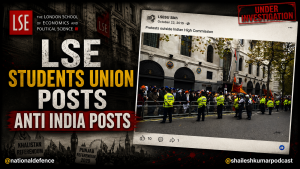
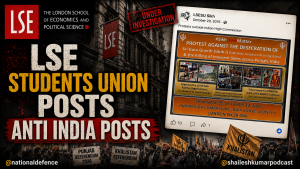
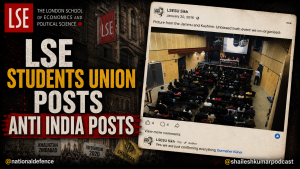 By itself, studying at the London School of Economics does not constitute evidence of any association with a separatist or anti-India organisation. However, it does raise a legitimate question as to whether, during that period, he came into contact with ideological or social networks that may warrant closer scrutiny by the appropriate authorities. What is evident is that, much like Boston University, the London School of Economics has also hosted events involving Khalistan-linked organisations and activists.
Now, let us return to the arrangements surrounding the Jantar Mantar protest.
According to multiple media reports, large quantities of food were delivered to the protest site through platforms such as Swiggy, Zomato, and other food delivery services. Volunteers reportedly distributed these meals continuously among the demonstrators.
As the protest gathered momentum, Delhi Police tightened security around Jantar Mantar. Several media reports stated that the police sought information from certain restaurants regarding large-volume food orders destined for the protest site.
However, Delhi Police denied imposing any blanket restriction on food deliveries to the area. Taken individually, each of these facts may appear unrelated.
Viewed together, they raise important questions about the networks, logistics, funding and support systems surrounding the protest. Those questions deserve a thorough, evidence-based investigation.
As the protest intensified, security measures around Jantar Mantar were significantly tightened.
Media reports described increased barricading, restrictions on the movement of ride-hailing and food delivery services near the protest site, geo-fencing in the surrounding area, and enhanced security deployment.
Another dimension of the investigation unfolded online.
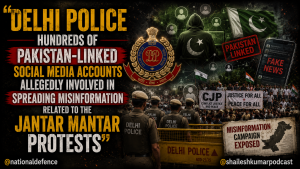 Delhi Police stated that it had identified hundreds of Pakistan-linked social media accounts allegedly involved in spreading misinformation related to the Jantar Mantar protests.
According to the police, approximately 400 to 480 Pakistan-linked handles were found to be circulating misleading posts, edited videos and fabricated content. Action was initiated to block these accounts. Police further stated that several of these handles had allegedly been active in earlier misinformation campaigns, including those linked to Operation Sindoor.
In a separate disclosure, Delhi Police said it was also monitoring around 180 additional social media accounts suspected of spreading misinformation relating to the protests.
These developments suggest that the battle was not confined to the streets of Jantar Mantar. It was also being fought in the digital space through coordinated online narratives—an angle that warrants equally serious investigation.
And this is precisely the aspect that deserves to be investigated with the same seriousness as the sudden growth of the Cockroach Janata Party’s presence on Instagram and other social media platforms.
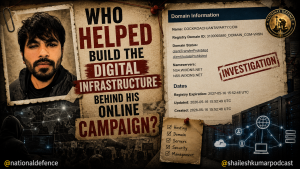 Who financed Abhijeet Dipke’s digital and social media operations?
Who helped build the digital infrastructure behind his online campaign?
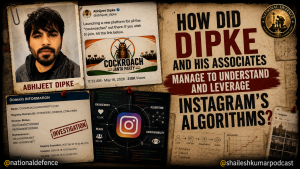
How did Dipke and his associates manage to understand and leverage Instagram’s algorithms? If they did, how did they acquire that knowledge? Was any external entity involved?
These were some of the questions I raised in the very first report of this investigative series.
What you have watched today is only the beginning.
Everything presented in this report is based on publicly available records, official documents, and verifiable information in the public domain.
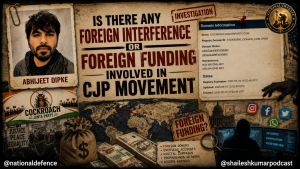 Some of these facts appear to connect with one another. Some raise serious and uncomfortable questions. And some still await answers from those who have, so far, chosen to remain silent.
As a journalist, my role is not to declare anyone guilty. My responsibility as an investigative journalist is to examine documents… to verify facts… and to place the available evidence before the public.
If you believe these questions deserve an impartial, transparent, and independent investigation, please share this report as widely as possible so that the facts and evidence become part of a broader public discussion.
Every investigation you watch on this channel / read on website is produced without the backing of any large corporation, political party, or special-interest group. It is made possible by viewers who believe that the pursuit of truth must remain fearless, independent, impartial, and evidence-based.
If you support independent, fact-based, and evidence-driven journalism, I invite you to become a Channel Member and join this mission. Your support enables us to conduct deeper investigations, uncover more documents, and continue asking the difficult questions that deserve answers.
About the author: Shailesh Kumar is an independent investigative freelance journalist and founder Editor of “National Defence. He has been reporting for India’s top and leading news television, newspapers and digital / web media for about 25 years.
Production Disclosure: Some illustrative visuals and background music in this documentary were created using licensed AI creative tools. All research, investigation, scripting and editorial decisions are human efforts by National Defence.
Comments